Jungian archetype
The Persona Archetype in Dreams
The mask you wear to meet the world, and the dreams in which it slips.
What is the Persona?
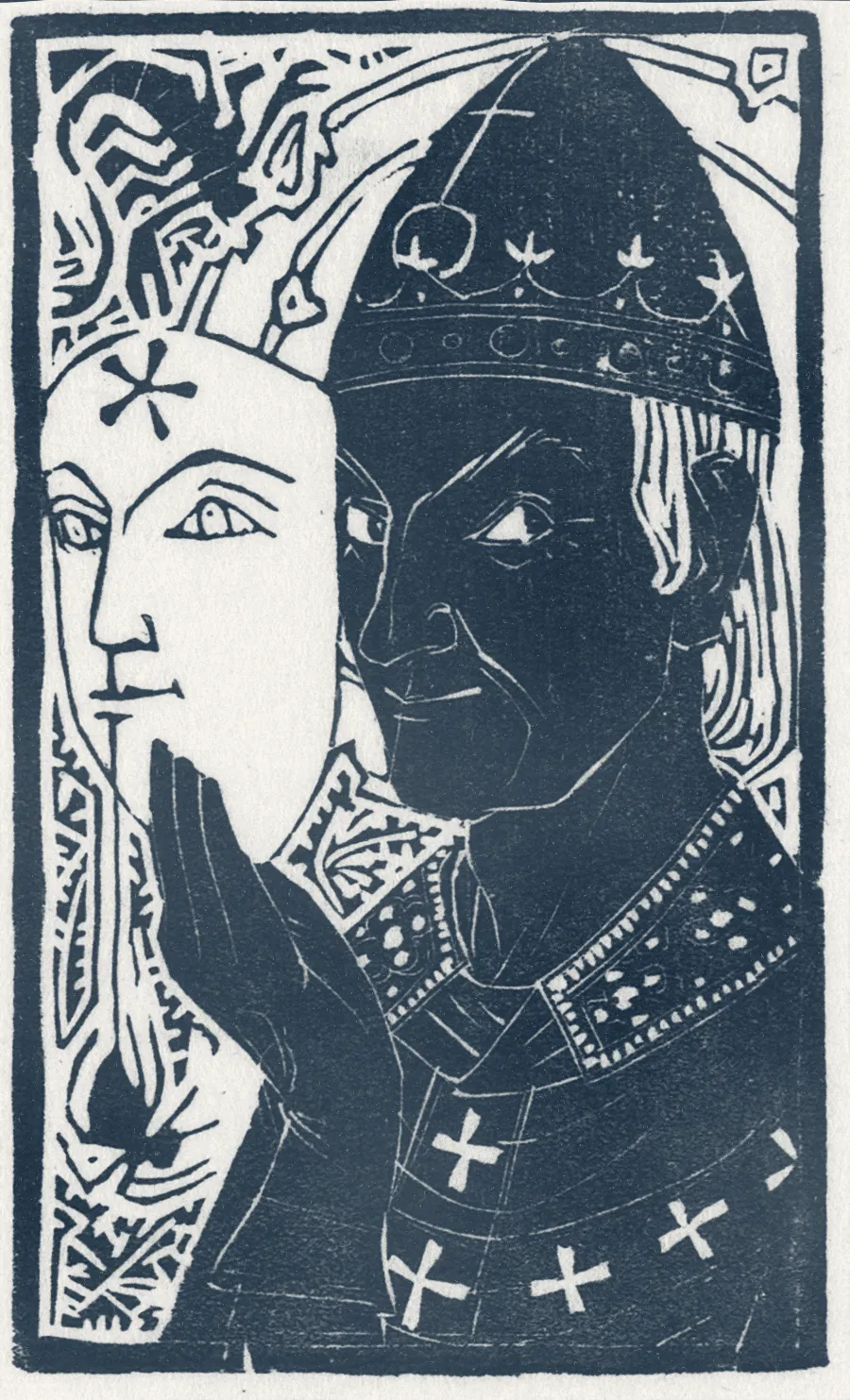
The Persona is the face we turn toward other people: the role, the manners, the professional self. Jung took the name from the masks worn by actors in classical theatre. It is not a lie. Everyone needs one, because nobody can meet the world entirely unguarded, and a good Persona lets you function, belong and be read correctly by others.
The trouble begins when a person comes to believe they are their mask. When identity collapses into title, reputation or role, the rest of the psyche is starved, and the unconscious begins to push back — often through dreams that strip the mask away at the worst possible moment.
“The persona is … a kind of mask, designed on the one hand to make a definite impression upon others, and, on the other, to conceal the true nature of the individual.”
— C. G. Jung, Two Essays on Analytical Psychology
How the Persona appears in dreams
- Being naked in public
- The classic Persona dream. The embarrassment is the point — the dream exposes what the social self has been covering, and asks how much of the covering is still necessary.
- Wearing the wrong clothes
- Pyjamas at a wedding, a uniform you no longer have the right to wear. Clothes in dreams are often the Persona itself, and a mismatch suggests the role and the person have come apart.
- Unprepared for an exam or performance
- Forgetting your lines, sitting a test you never studied for. These dreams often appear when you feel judged on a role you are not sure you can sustain.
- Masks, make-up and mirrors
- A face that will not come off, or a reflection that is not quite yours, points straight at the relationship between who you appear to be and who you are.
- Teeth falling out
- Many Jungian readers connect this frequent dream to anxiety about appearance, speech and how one is seen, though it can carry other meanings too.
In myth and story
-
The Emperor's New Clothes — Hans Christian Andersen
The naked-in-public dream as a fairy tale. An entire court keeps up appearances until a child says what everyone can see.
-
The Great Gatsby — F. Scott Fitzgerald
James Gatz builds Jay Gatsby — the parties, the shirts, the "old sport" — so completely that the man underneath can barely be found.
-
The Talented Mr. Ripley — Patricia Highsmith
Tom Ripley tries on another man's life like a suit, and the novel follows what happens when there is almost nothing beneath the mask.
What it means when the Persona appears
A Persona dream asks a simple question: is the mask still serving you, or are you serving it? Embarrassment in the dream is a measure of how much is invested in appearance. Relief in the dream — being naked and finding nobody minds — can be a sign that the role is loosening in a healthy way.
These dreams cluster around transitions: a new job, a promotion, a break-up, moving to a new city. Each one asks you to build a different face, and the unconscious keeps a close eye on whether the new face fits.
Persona and Shadow work as a pair. The more polished the mask, the more it has to hide. If you find Persona dreams alongside Shadow dreams, it is worth asking what the public self is keeping out of view.
Questions to bring to the dream
- Who was watching you in the dream, and whose judgement did they stand for?
- Which role in your waking life feels most like a costume right now?
- What would happen if people saw you without it?
- Did the exposure in the dream feel catastrophic, or strangely freeing?
Further reading
-
Two Essays on Analytical Psychology — C. G. Jung
Collected Works 7, "The Relations between the Ego and the Unconscious"
-
Man and His Symbols — C. G. Jung
The most accessible introduction, written for general readers
Open Library lends many of these online for free; WorldCat shows the libraries near you that hold a copy.