Jungian archetype
The Dream Ego — You, Inside the Dream
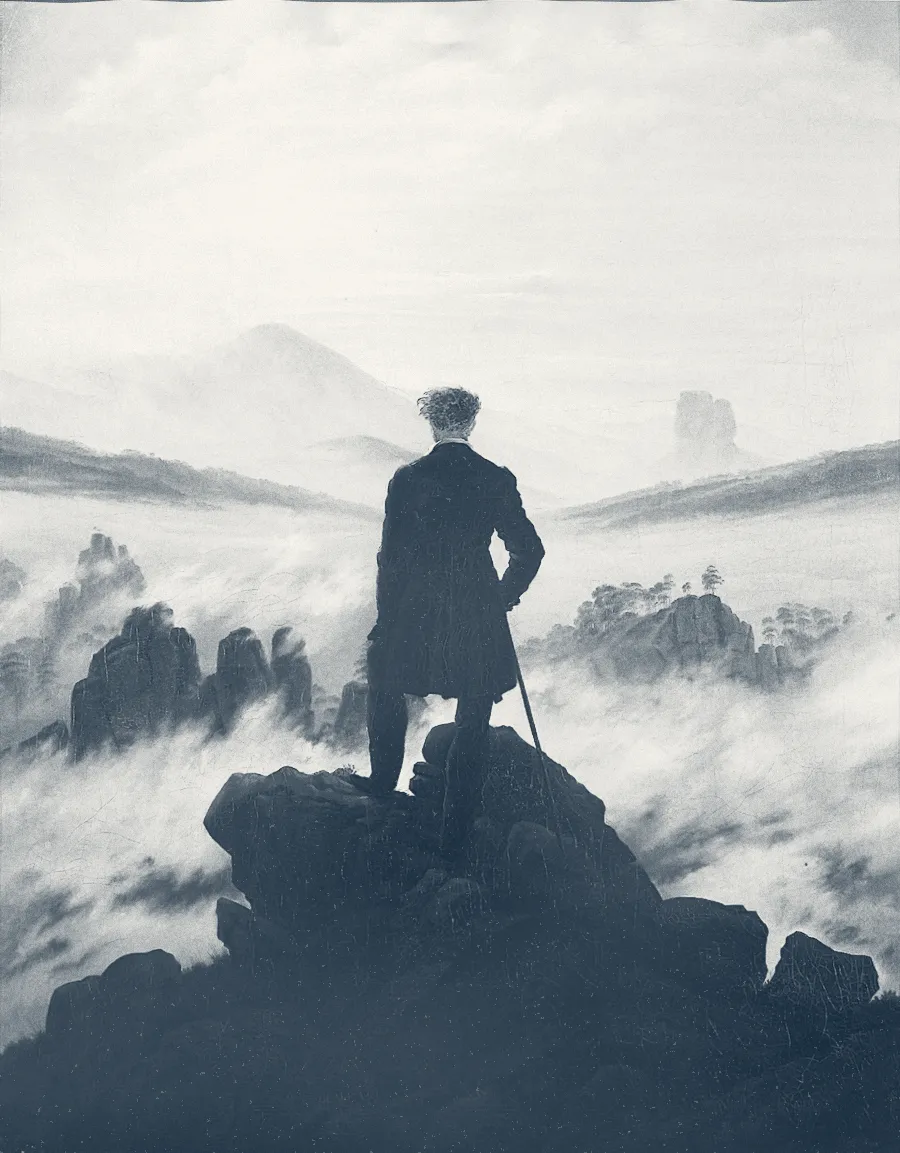
The "I" of the dream — the one who runs, falls, flies, or simply watches.
What is the dream ego?
The dream ego is not one of Jung's archetypes in the strict sense. The term comes from Jungian dream work, where it names the figure in the dream that you experience as yourself. Usually it looks like you, though sometimes you are younger, someone else entirely, or only a point of view.
Watching how the dream ego behaves is one of the most practical tools in dream interpretation. It is often a fair portrait of your waking attitude: how you meet difficulty, how much you trust, how you respond to the other figures of the psyche when they appear.
“The dream is a little hidden door in the innermost and most secret recesses of the soul.”
— C. G. Jung, The Meaning of Psychology for Modern Man
How the dream ego appears in dreams
- Falling
- One of the most common dreams there is. It often appears when the conscious attitude has lost its footing — overextended, overconfident, or simply without support.
- Flying
- Freedom and perspective, or a flight above difficulties that would be better met on the ground. The feeling of the flight usually tells you which.
- Unable to move, run or speak
- Paralysis in a dream frequently mirrors helplessness in waking life, especially in situations where you feel you cannot act or be heard.
- Lost in a building or city
- Searching for a room, a gate or the way home suggests a conscious attitude that has lost orientation.
- Watching from outside
- When you observe the dream rather than take part, it can reflect detachment — useful in some lives, a defence in others.
In myth and story
-
Alice's Adventures in Wonderland — Lewis Carroll
The whole book is a dream, and Alice is the dream ego — shrinking, growing, arguing, lost — until she finally refuses the logic of the dream and wakes.
-
Inferno — Dante Alighieri
It opens with a dream ego's situation: midway through life, lost in a dark wood, the straight way gone.
-
The Wonderful Wizard of Oz — L. Frank Baum
Dorothy carried off by a storm to a world that mirrors her own, searching for the way home. The 1939 film makes the dream explicit.
What it means when the dream ego appears
Jungian analysts often read a dream by comparing what the dream ego does with what it could have done. Running from the Shadow, ignoring a guide, refusing a gift — each choice says something about the stance consciousness takes toward the unconscious.
The dream ego also changes over time. A journal kept across months often shows it becoming more capable: turning to face what chased it, speaking to strangers, finding the room it was searching for. Those changes are among the clearest signs of psychological movement.
Recurring dreams are especially worth reading this way. If the same dream keeps returning, notice whether the dream ego is doing anything differently. Often the dream stops recurring once it does.
Questions to bring to the dream
- What did you do in the dream, and what could you have done instead?
- How did you feel about your own actions?
- Does that behaviour resemble how you meet difficulty in waking life?
- If the dream repeats, has your part in it changed at all?
Further reading
-
Jungian Dream Interpretation — James A. Hall
A short, practical handbook from a Jungian analyst
-
Dreams — C. G. Jung
Jung's main papers on dreams, collected from the Collected Works
Open Library lends many of these online for free; WorldCat shows the libraries near you that hold a copy.