Jungian archetype
The Wise Old Man Archetype in Dreams
The voice that arrives when you have run out of answers.
What is the Wise Old Man?
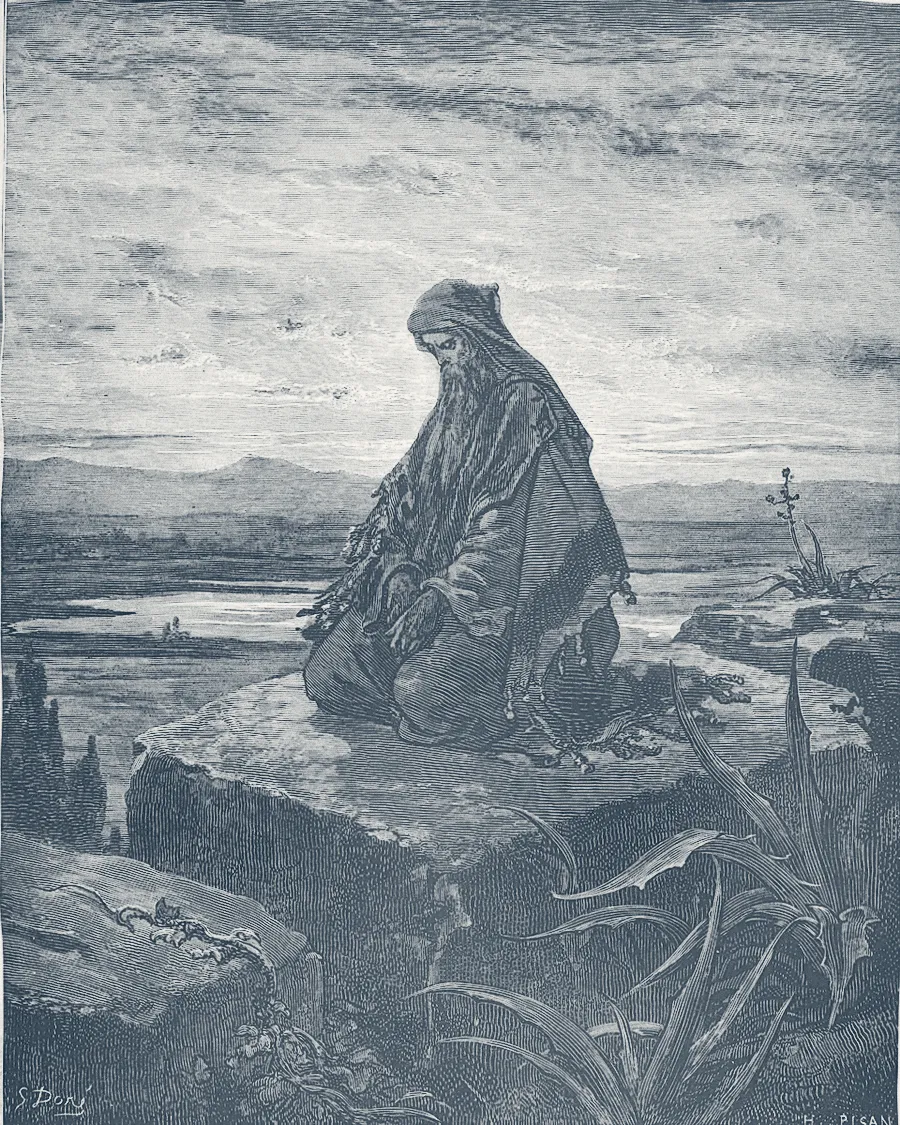
Jung called the Wise Old Man an archetype of spirit: the part of the psyche that produces meaning, insight and orientation. In myth and fairy tale he is the hermit at the crossroads, the wizard, the prophet, the old king who tells the hero where to go. Jung met his own version in a dream figure he named Philemon, who said things Jung had not consciously thought.
The figure is not always old or male. The same function can appear as a teacher, a doctor, a priestess, a child who speaks with authority, or simply a voice. What marks it is the quality of the knowledge: unexpected, pointed, often stranger than anything you would have thought yourself.
“Philemon represented a force which was not myself.”
— C. G. Jung, Memories, Dreams, Reflections
How the Wise Old Man appears in dreams
- A teacher, professor or mentor
- Someone whose authority you accept without question in the dream, often handing you a phrase or task.
- An old man, hermit or priest
- The traditional form. He frequently appears at a crossroads, a threshold or the top of a climb.
- A doctor or healer
- A figure who diagnoses what is wrong — sometimes more bluntly than you would like.
- A disembodied voice
- A sentence spoken from nowhere, which you wake up remembering word for word. Write it down before it fades.
- Books, maps and inscriptions
- Sometimes the wisdom arrives as an object rather than a person — a page you can read, a map with one road marked.
In myth and story
-
The Once and Future King — T. H. White
Merlyn, living backwards through time, teaches the boy Arthur by turning him into animals — wisdom that arrives sideways, through experience rather than instruction.
-
The Lord of the Rings — J. R. R. Tolkien
Gandalf appears at the moments when the hobbits are out of their depth, and never simply tells them what to do.
-
Siddhartha — Hermann Hesse
Vasudeva the ferryman, who learned everything he knows from listening to the river. Hesse had been in analysis with one of Jung's students a few years before writing it.
What it means when the Wise Old Man appears
Jung observed that this figure tends to appear when the dreamer is stuck: when will and reason have done everything they can and the situation is still unresolved. The appearance itself is meaningful. It suggests that the psyche has resources beyond the conscious mind, and that the impasse is not as total as it feels.
Take what the figure says seriously, and also take it symbolically. Advice from dream sages is often odd — "go back to the house by the river", "you have forgotten the key" — and its meaning only opens once you connect it to your waking life.
There is a shadow side here too. A pompous, dogmatic or manipulative authority in a dream can point to the danger of identifying with wisdom rather than receiving it — of becoming the person who always knows best.
Questions to bring to the dream
- What problem were you facing when the figure appeared?
- What exactly did they say or give you? Write the words down.
- Did their advice feel strange — and what might it mean in symbolic terms?
- Whose voice in your life carries this kind of authority, and do you trust it?
Further reading
-
The Archetypes and the Collective Unconscious — C. G. Jung
Collected Works 9i, "The Phenomenology of the Spirit in Fairytales"
-
Memories, Dreams, Reflections — C. G. Jung
Jung's late memoir, including his encounters with Philemon
Open Library lends many of these online for free; WorldCat shows the libraries near you that hold a copy.